Kutch, Gujarat
Lippan Kaam
"Mirrored clay art that transforms walls into light"
History & Origins
Lippan Kaam is a centuries-old wall art form practiced by the women of the Rabari and Meghwal communities in the Kutch district of Gujarat. The word 'Lippan' means coating or plastering in the local dialect. Traditionally, women adorned the interior walls of their homes with intricate clay patterns embedded with small circular mirrors (abhla). This art form was originally part of the ritual of preparing a home before festivals and auspicious occasions.
Cultural Significance
Lippan Kaam carries deep cultural and spiritual significance for the communities of Kutch. The mirror work is believed to ward off the evil eye, and the geometric patterns are symbolic of prosperity and protection. It has also become a GI-tagged art form recognized for its unique cultural identity.
Where to find it today
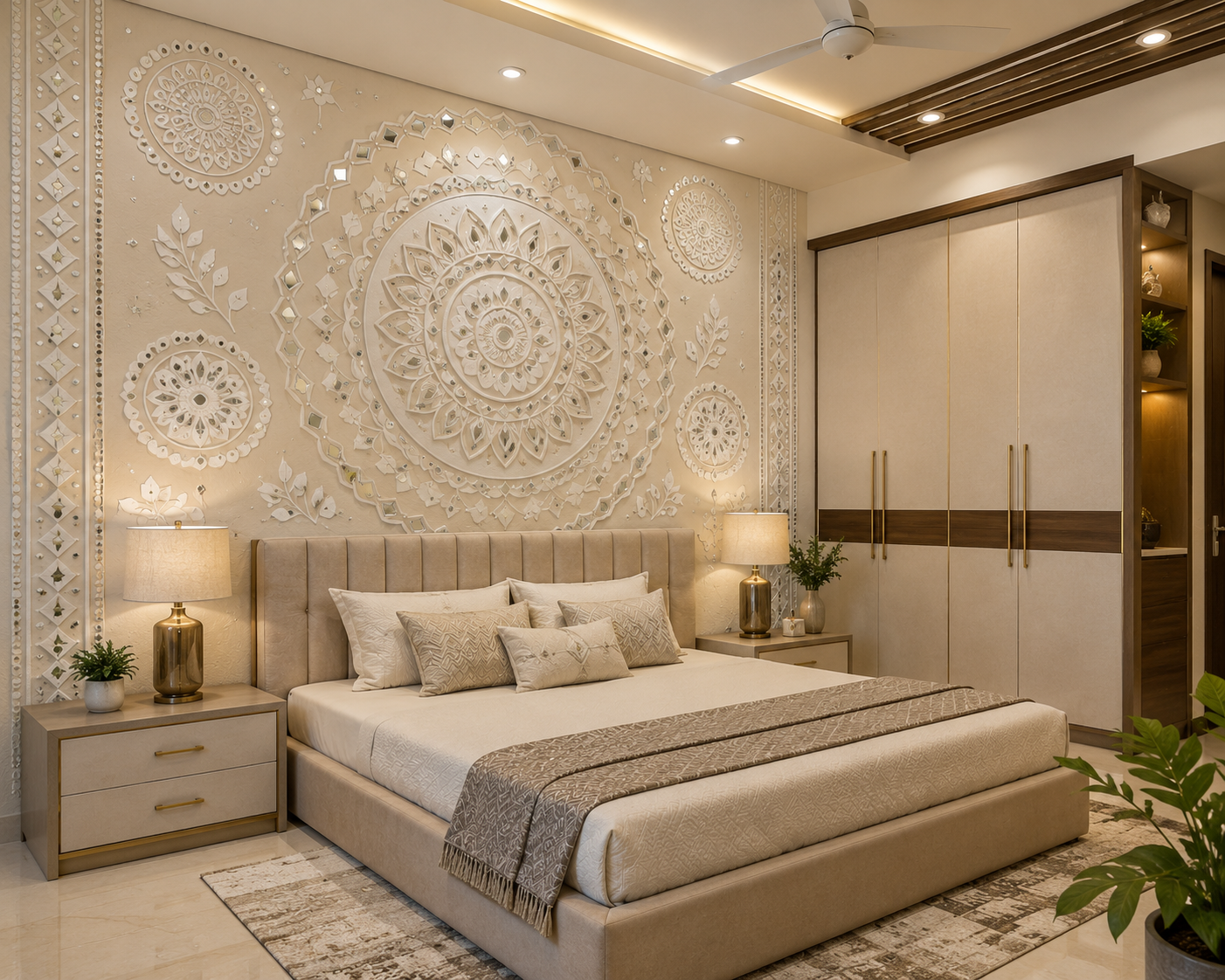
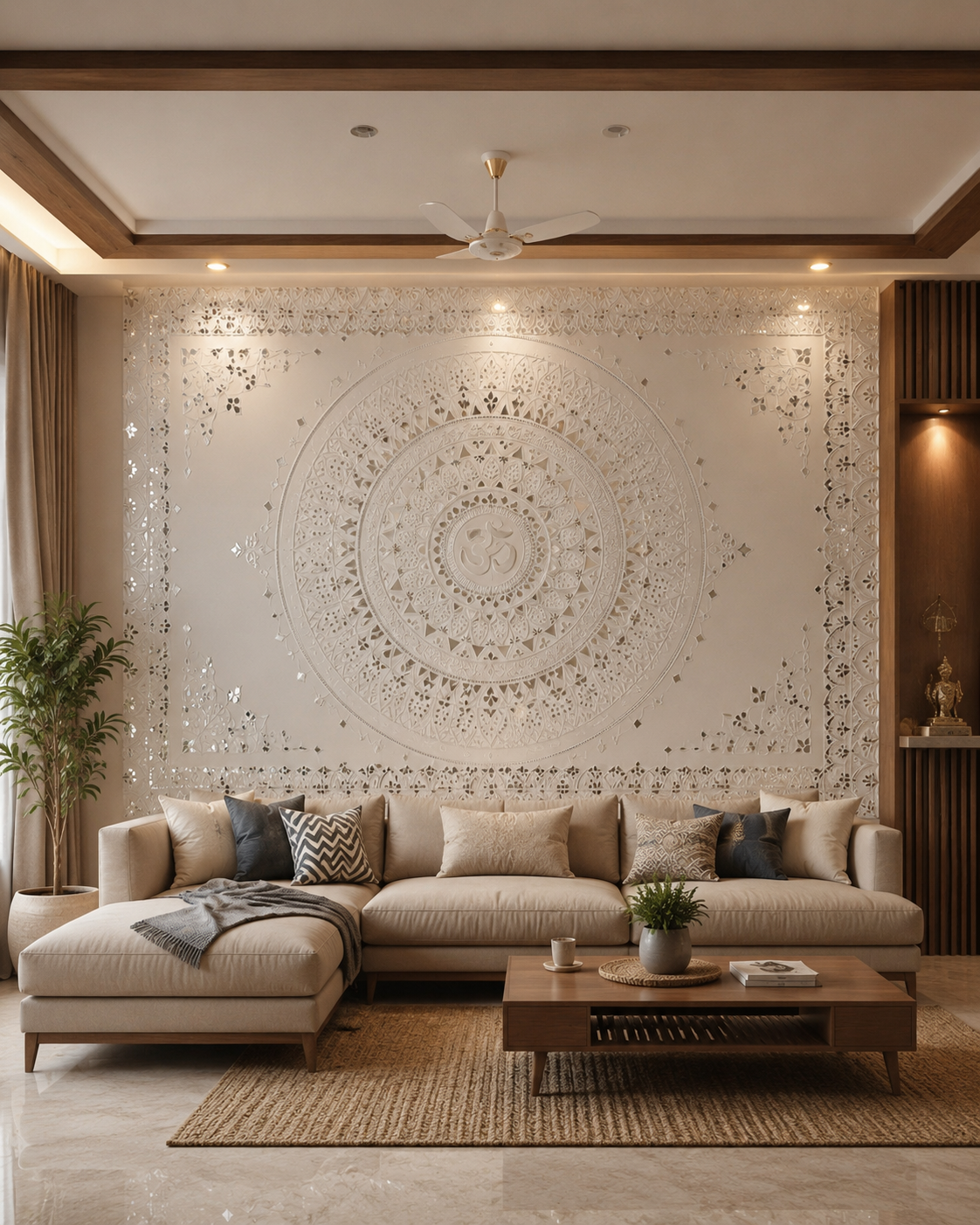
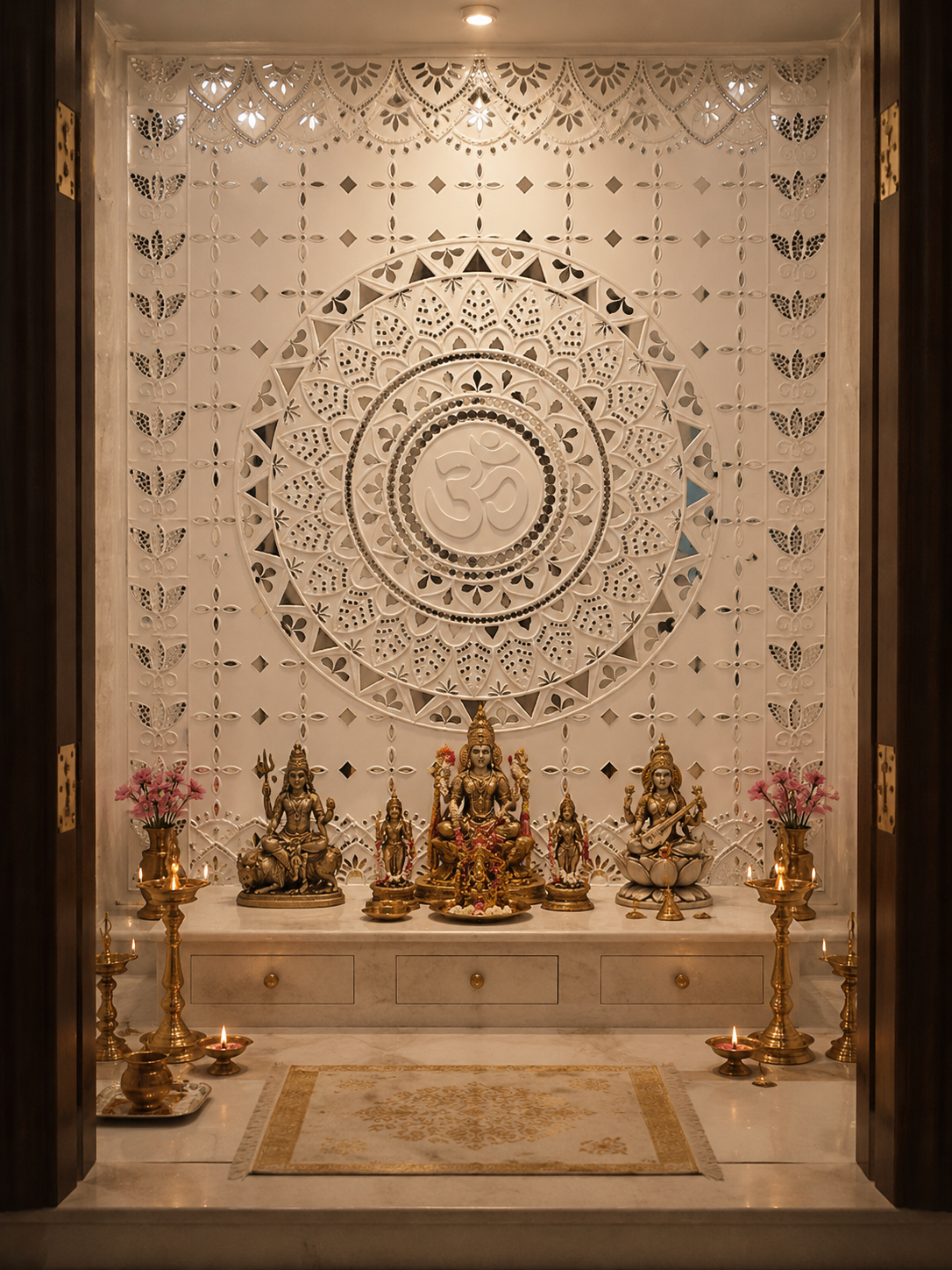
Traditionally found in the mud homes (bhungas) of the Rann of Kutch. Today it adorns luxury hotels, corporate offices, and homes across India and internationally.
Seen in real spaces
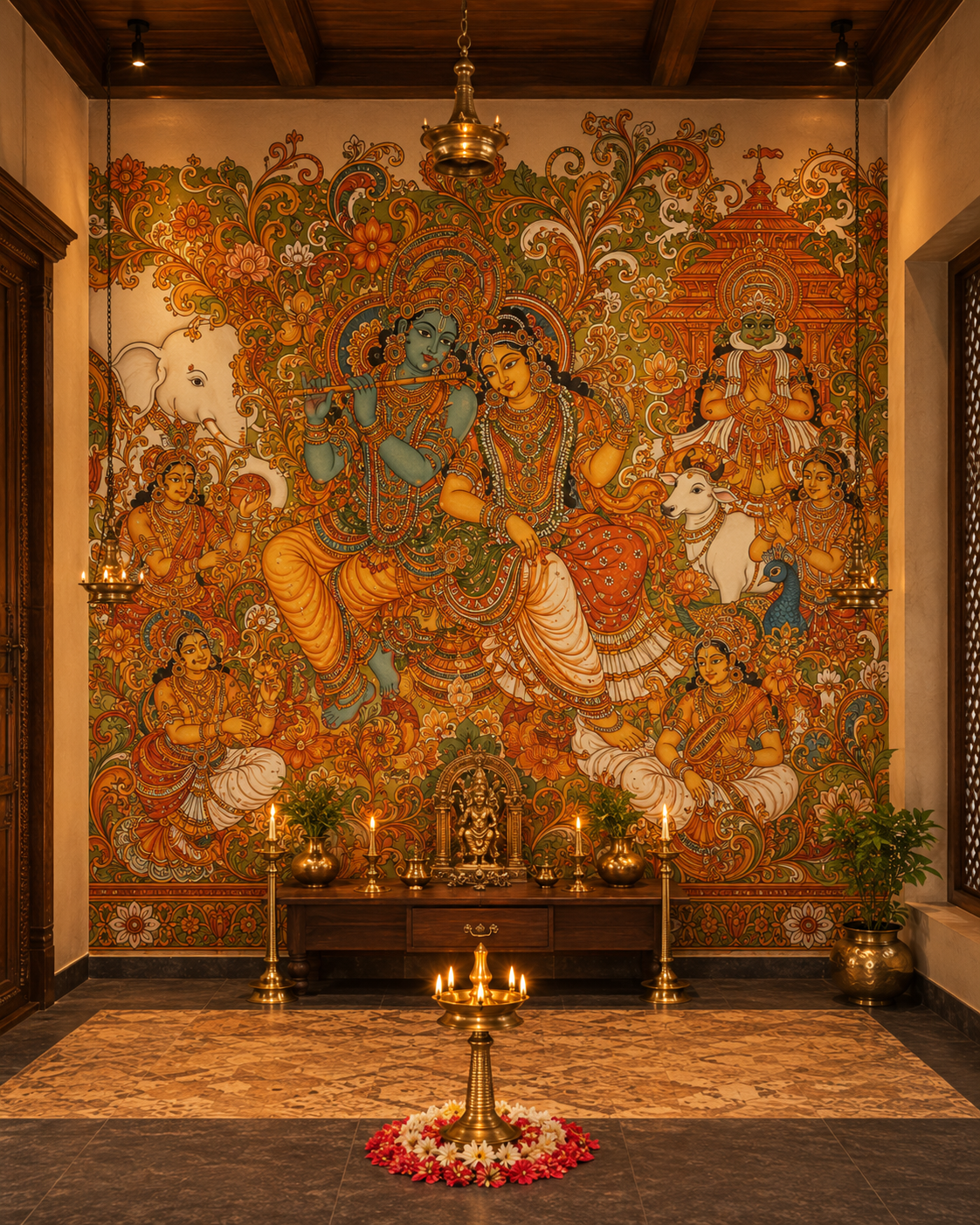
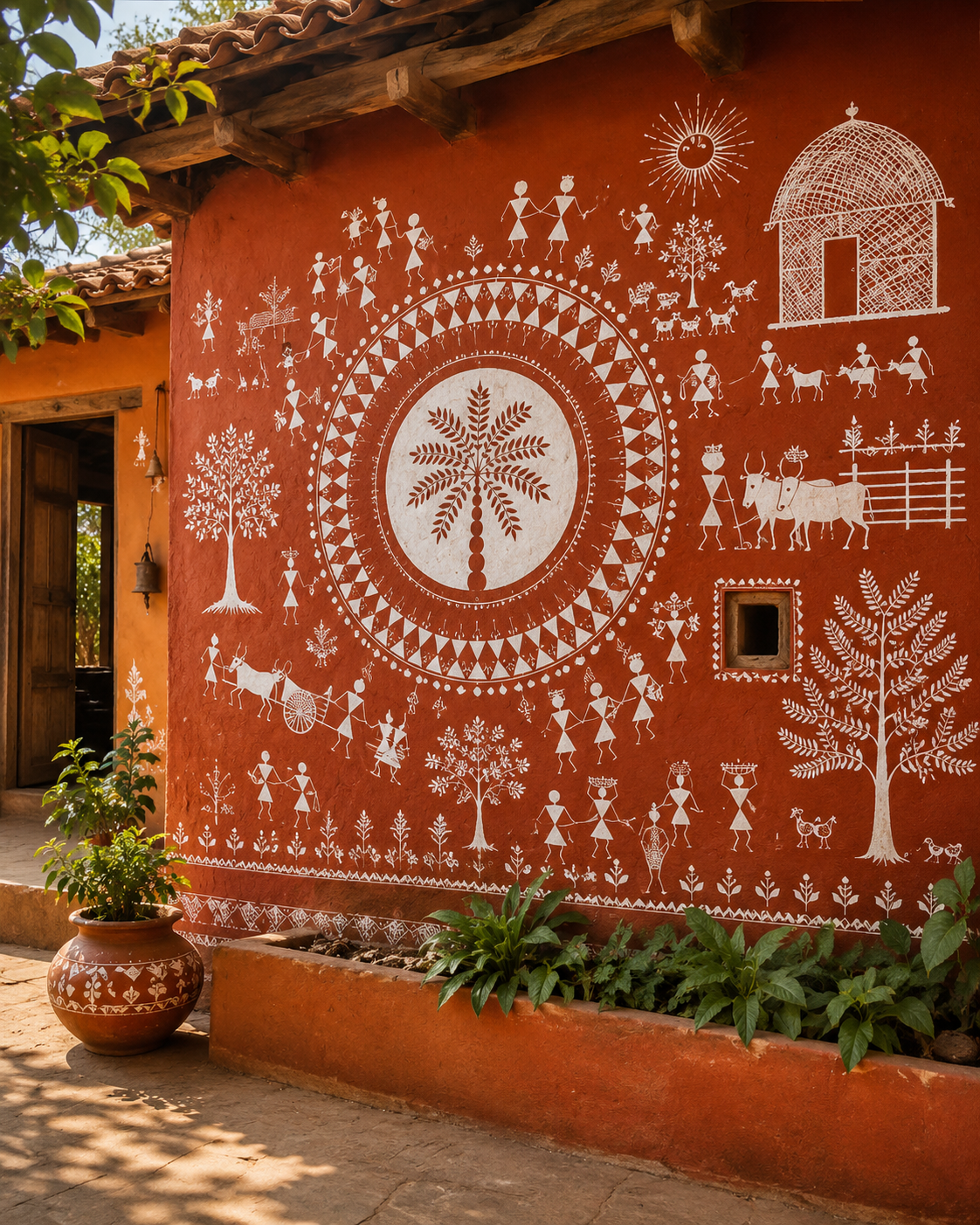
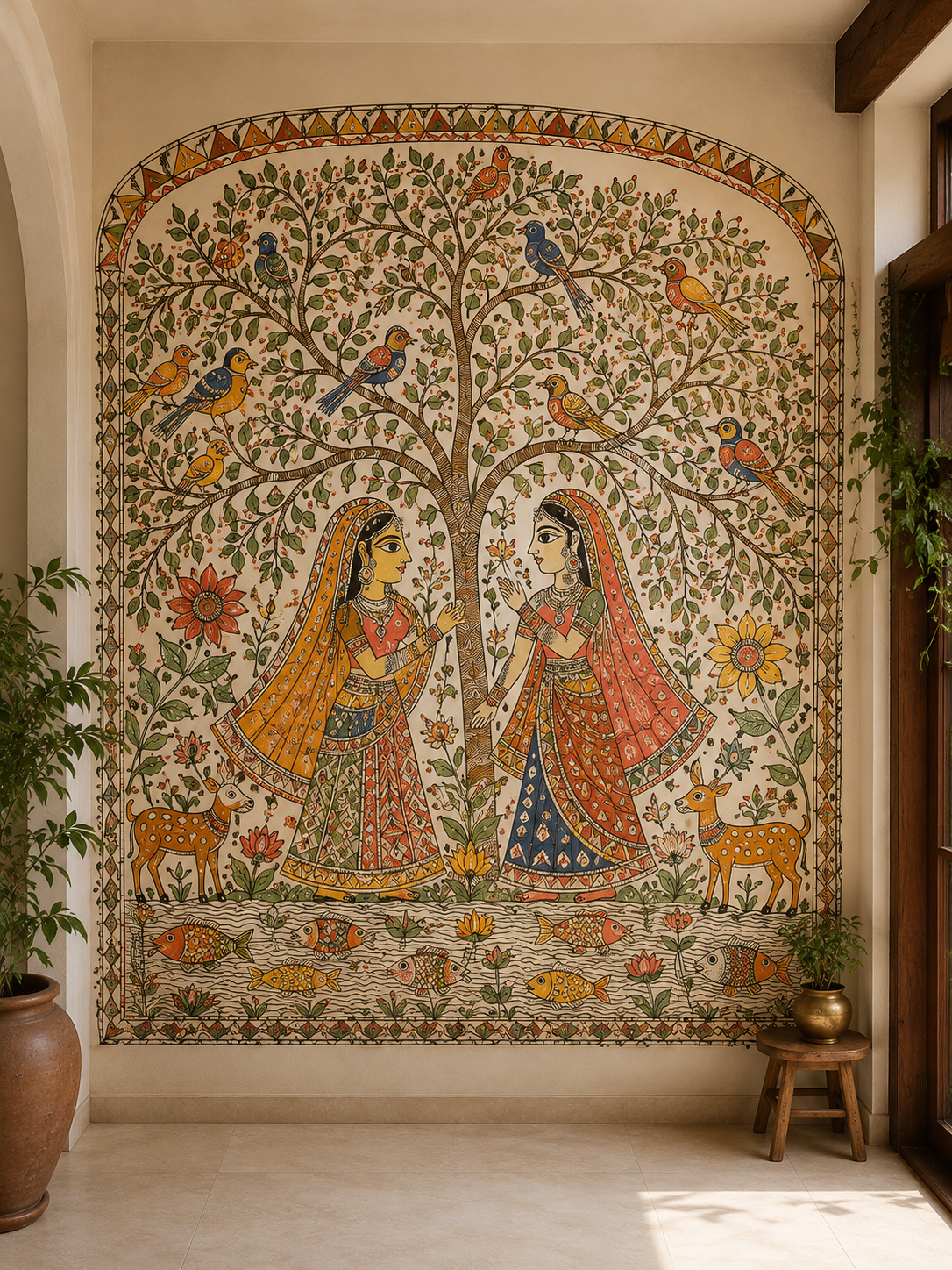
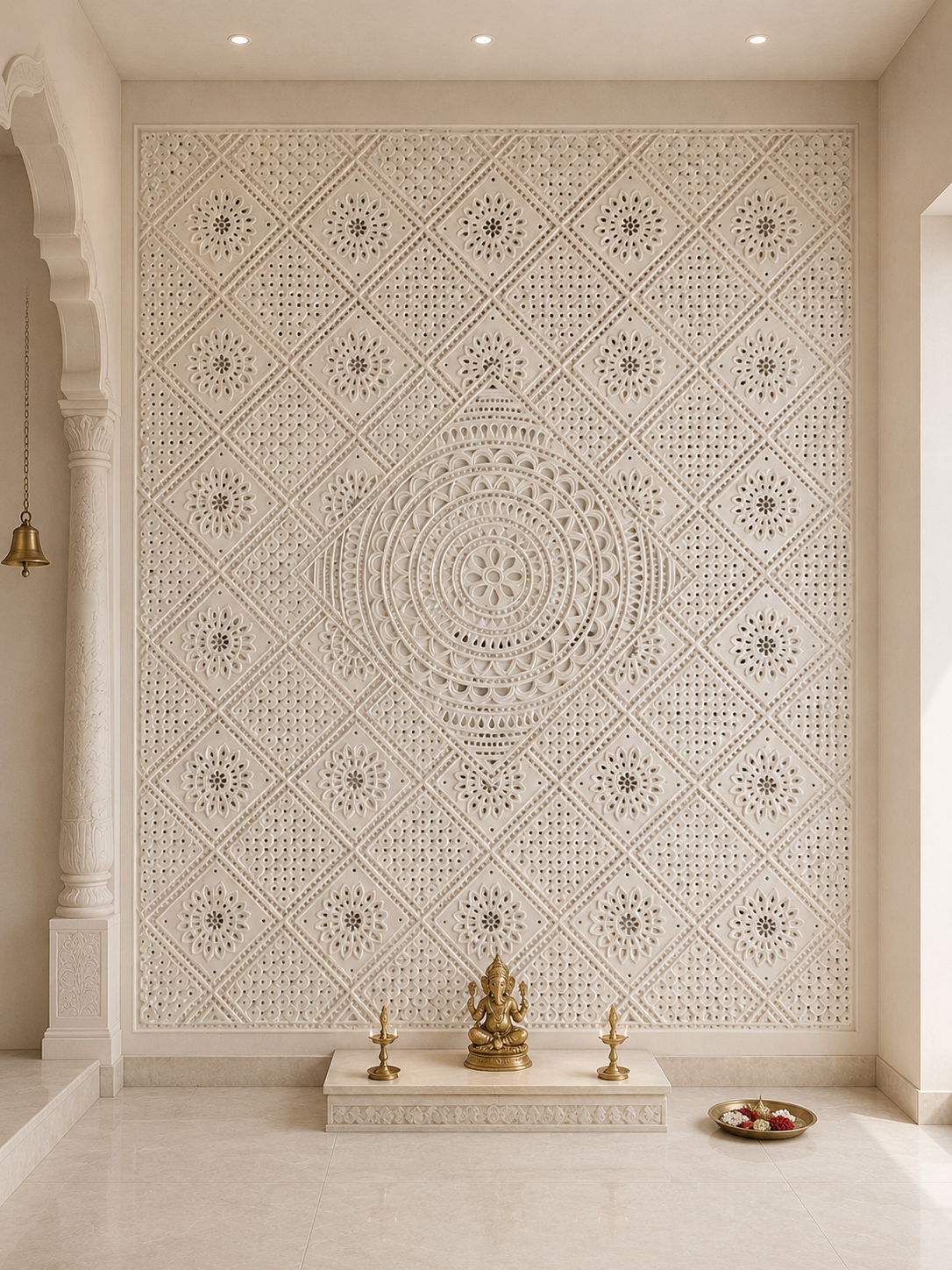
A few examples of Lippan Kaam placed in different room types.
Want Lippan Kaam on your wall?
Tell us about your space — we'll match you with a verified artist.
Get a custom quote →