Mithila (Madhubani district), Bihar
Madhubani Mithila Paintings
"The ancient language of Mithila's women"
History & Origins
Madhubani (also called Mithila painting) is a living tradition with roots in the epic Ramayana — King Janaka is said to have commissioned these paintings for his daughter Sita's wedding. For centuries, women of the Mithila region painted on freshly plastered mud walls and floors during festivals and life ceremonies. After the 1934 earthquake devastated many homes, Indian civil servant William Archer documented the art, leading to its transition from walls to paper and wider recognition.
Cultural Significance
Madhubani painting is a matrilineal tradition passed from mothers to daughters, encoding spiritual knowledge, social values, and mythological wisdom in visual language. It received GI tag status in 2007 and has been used by artists to address contemporary social issues like environmental conservation and gender equality.
Where to find it today
Practiced across Madhubani, Darbhanga, and Sitamarhi districts of Bihar. Bihar state government's Mithila Art Institute actively promotes it. Now featured in fashion, textiles, and architectural installations worldwide.
Seen in real spaces
A few examples of Madhubani Mithila Paintings placed in different room types.
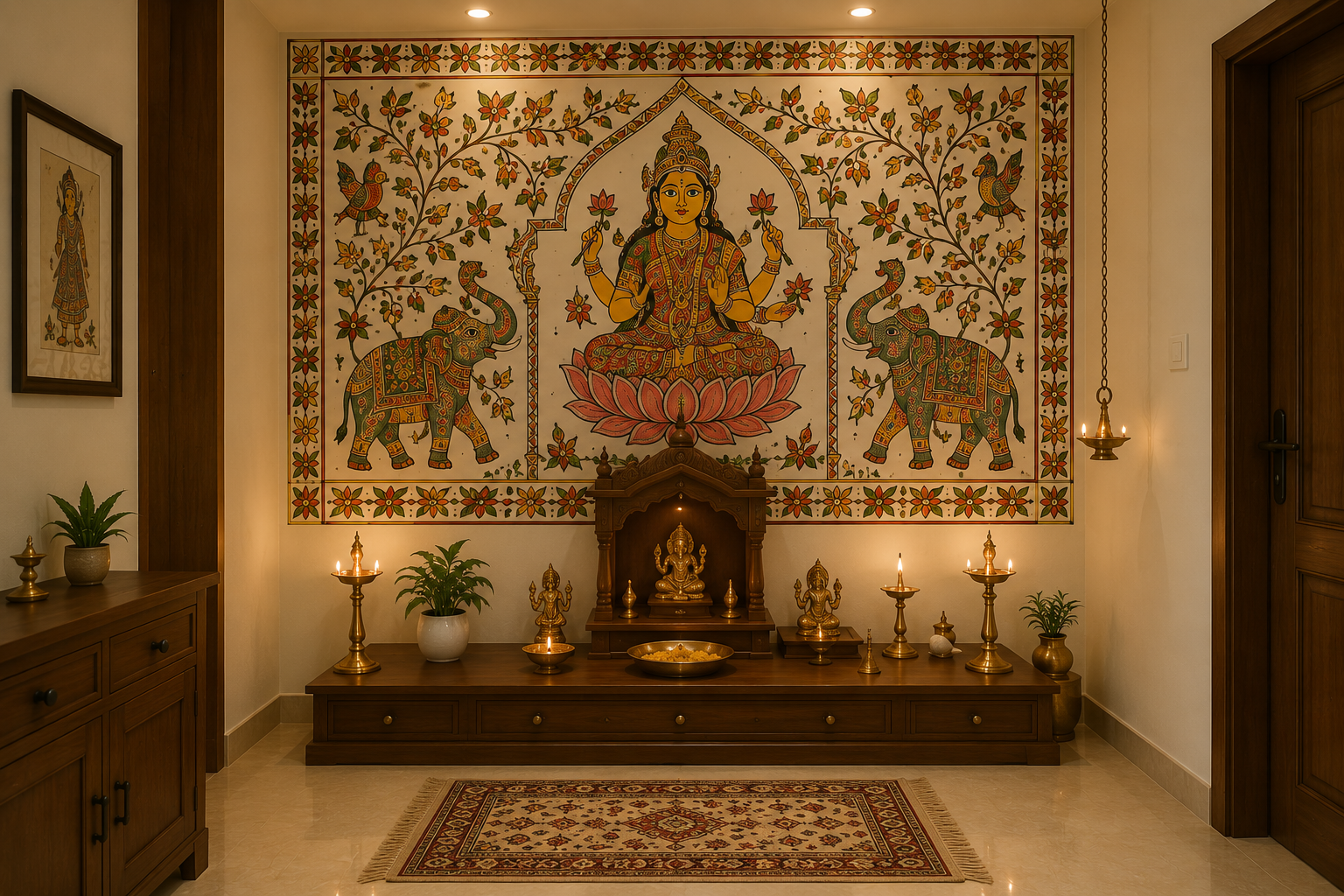
Puja Room
Madhubani tree-of-life in a home puja room
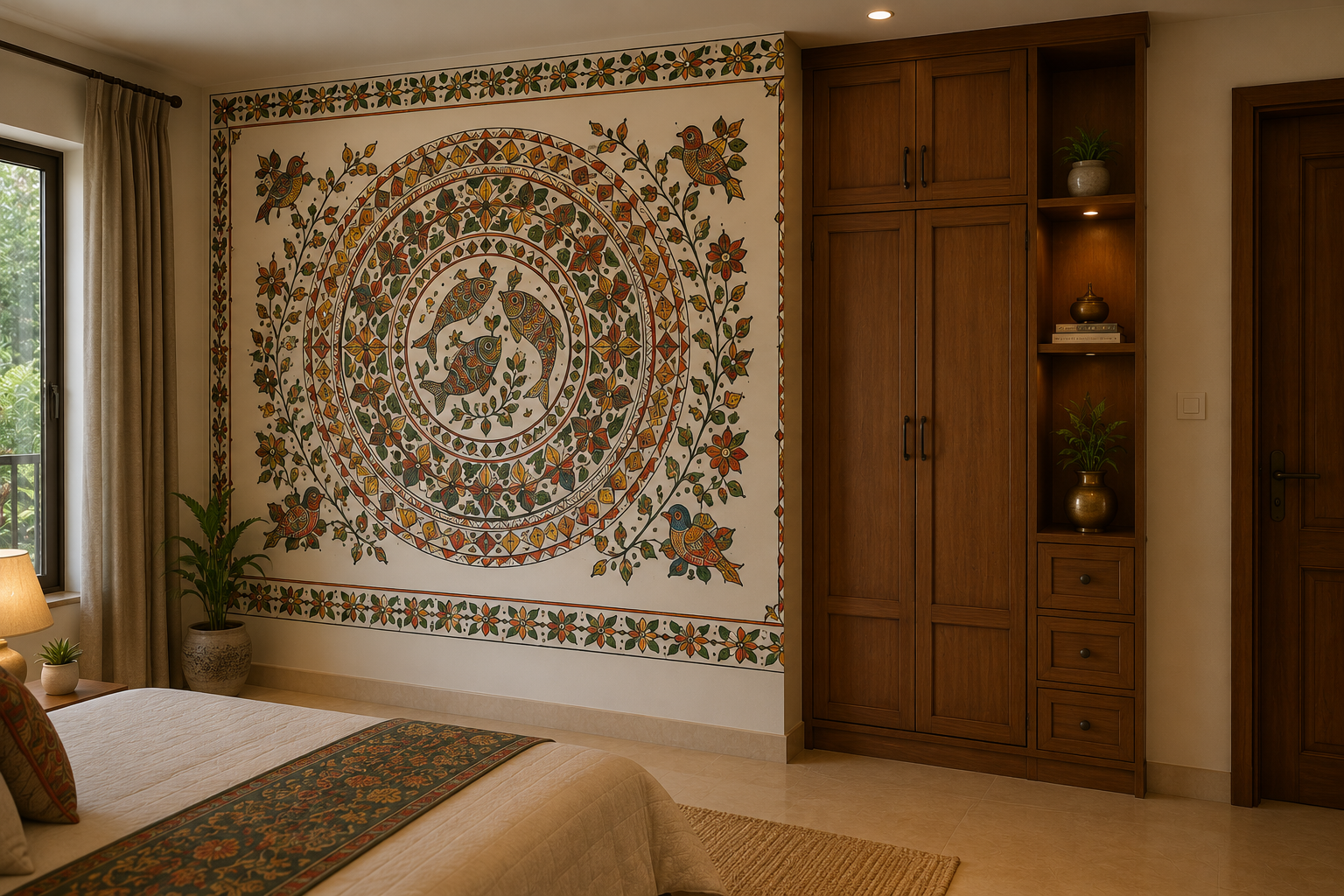
Near Cupboard
Madhubani panel beside a bedroom cupboard
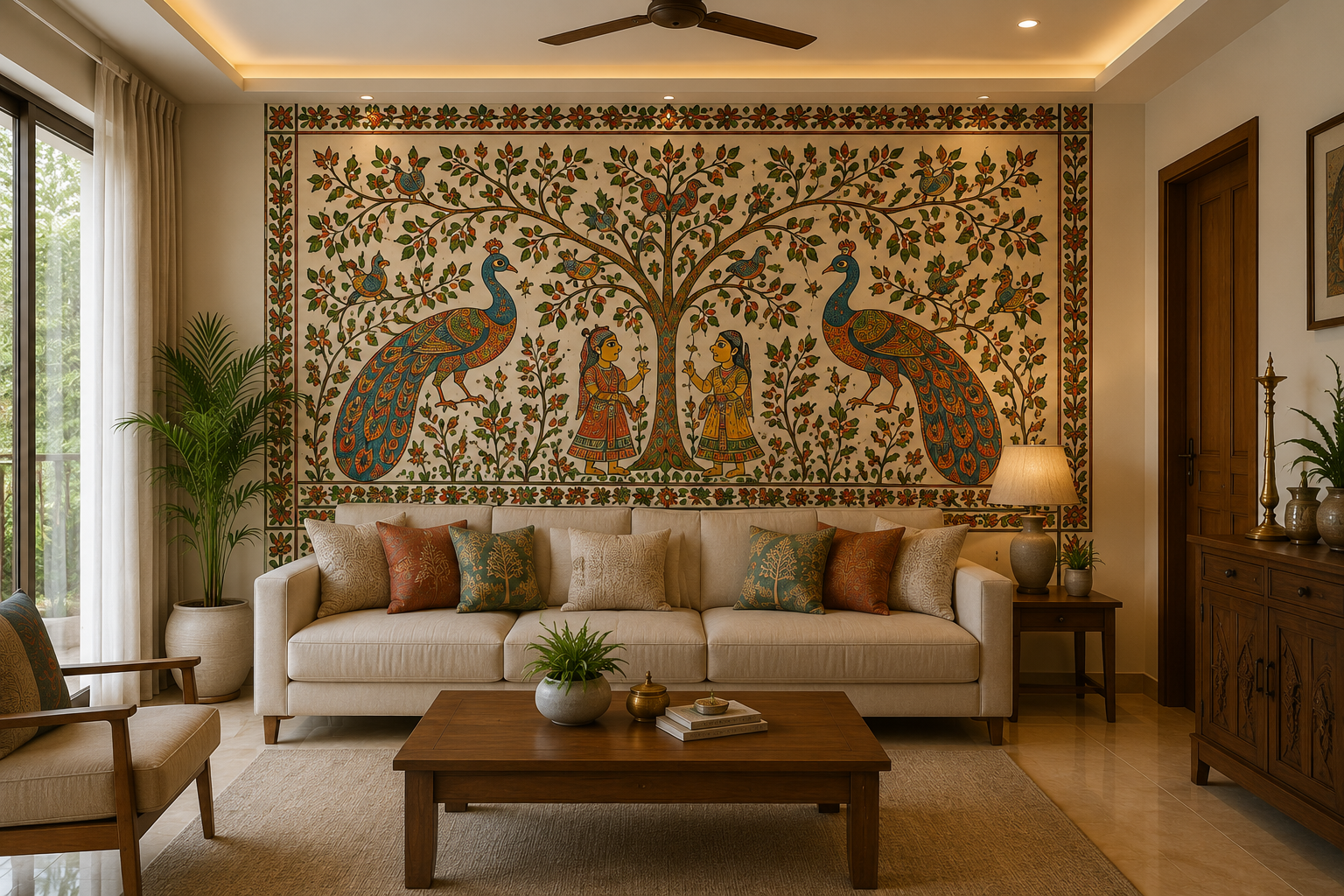
Behind Sofa
Madhubani composition above a living-room sofa
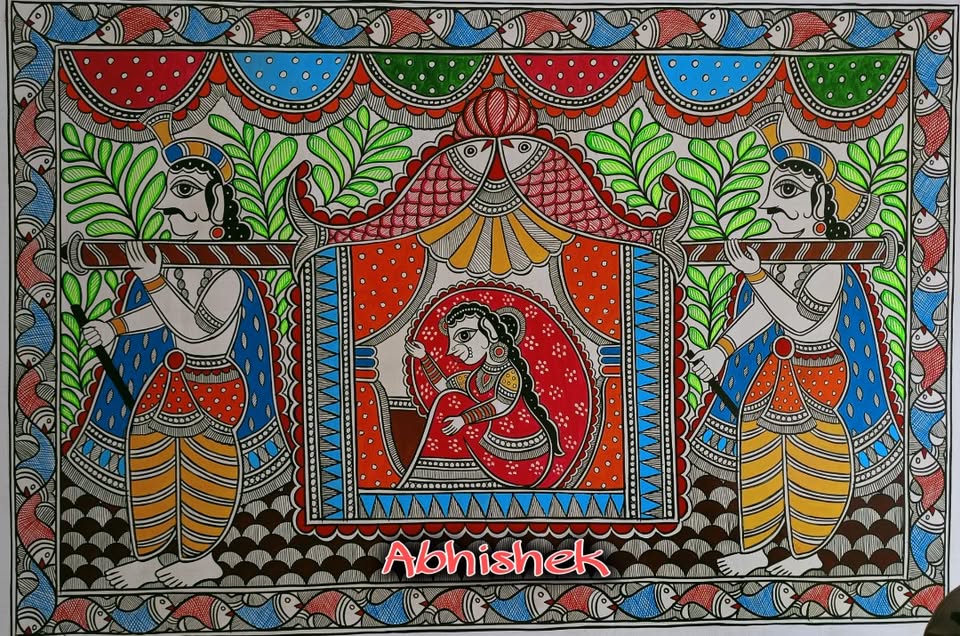
Wall Art
Doli procession — a bride carried in a palanquin, framed by fish borders
Wall Art
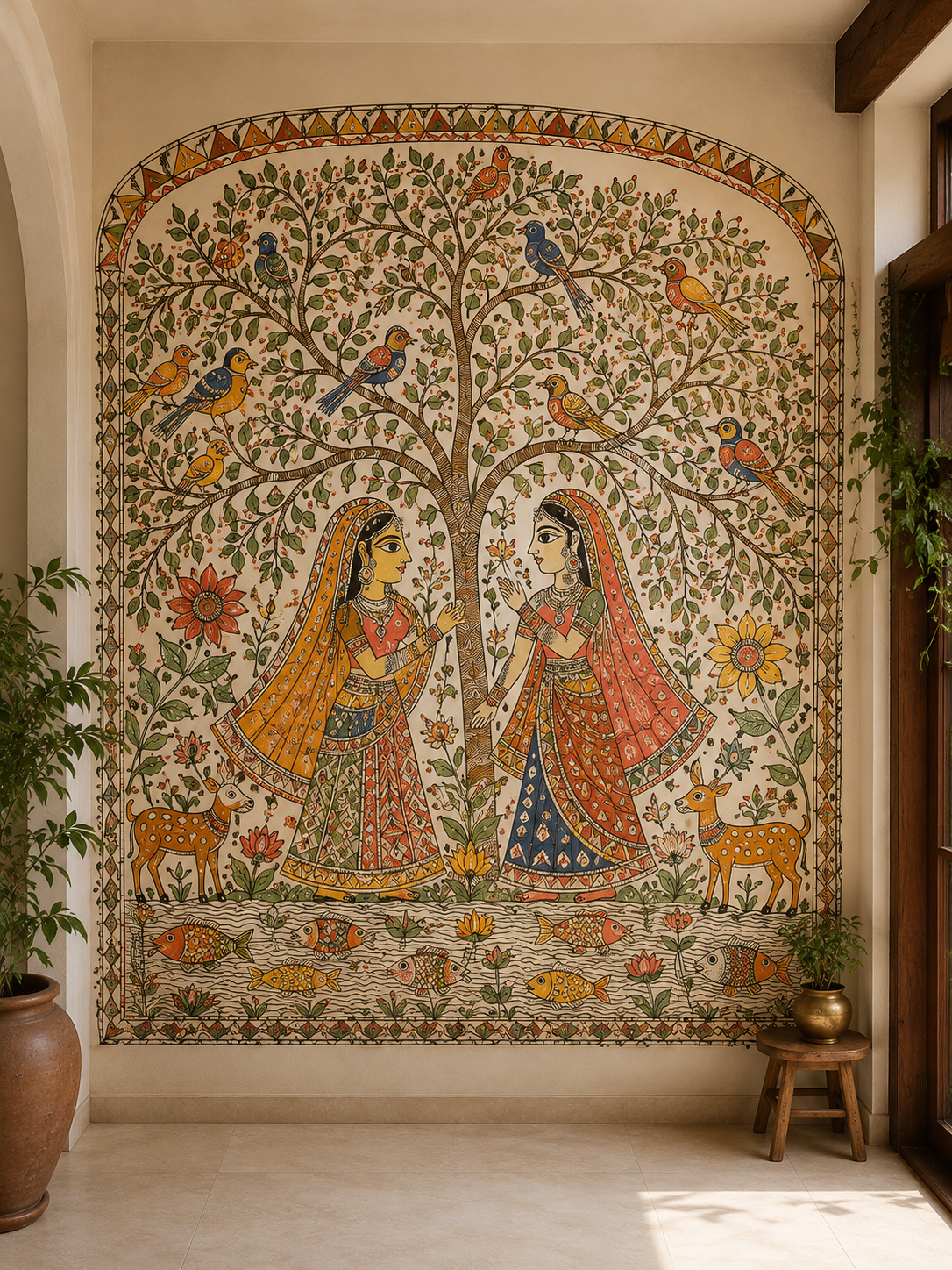
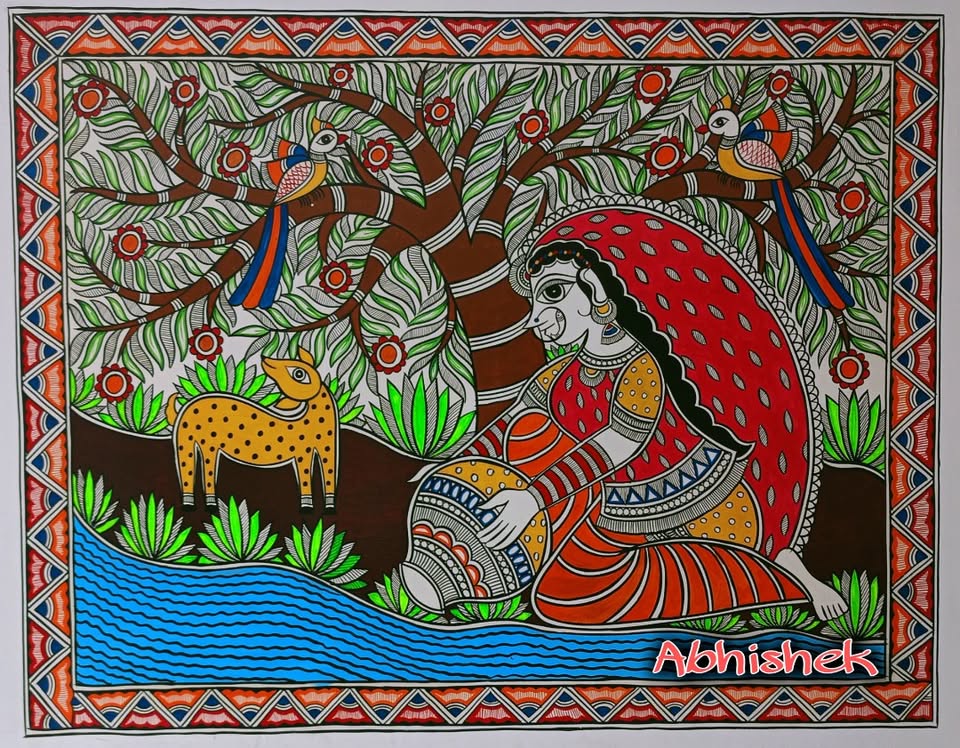
A woman by the river beneath a flowering tree, with deer and birds
Wall Art
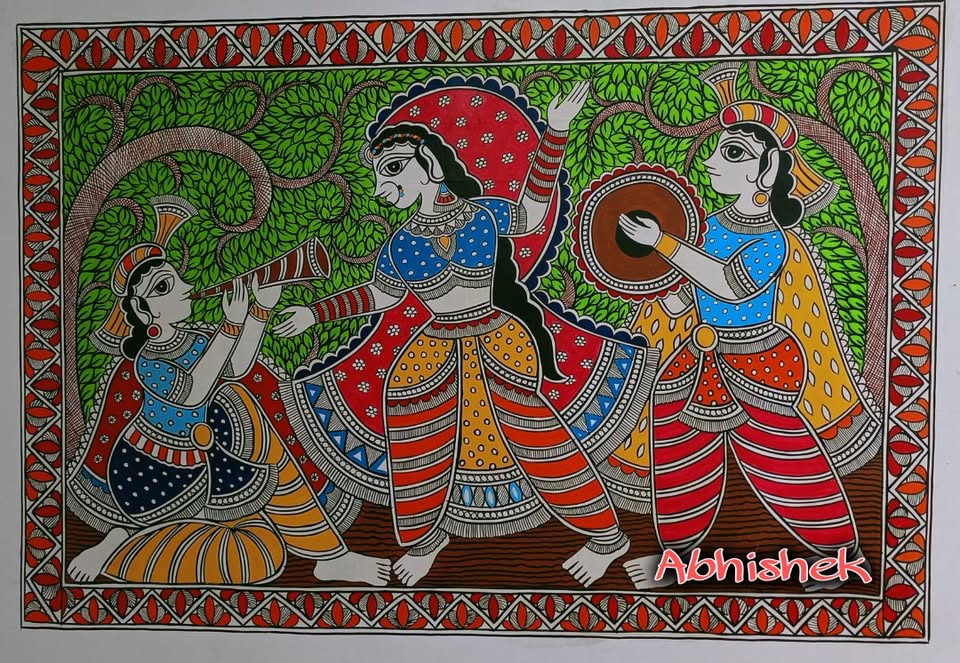
Folk dance celebration with musicians on shehnai and dholak
Door Panel
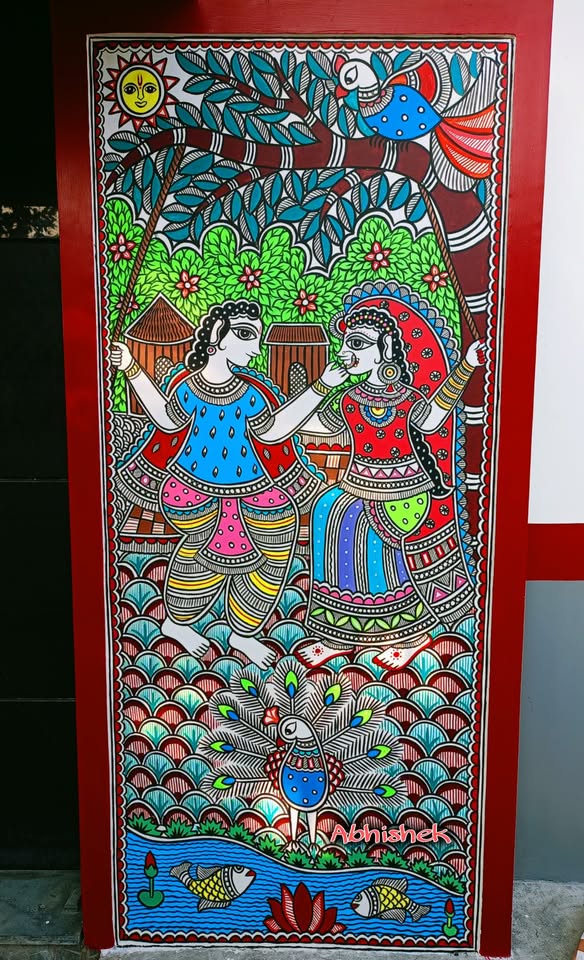
Couple on a jhula (swing) with peacock — hand-painted on a door
Wall Panel
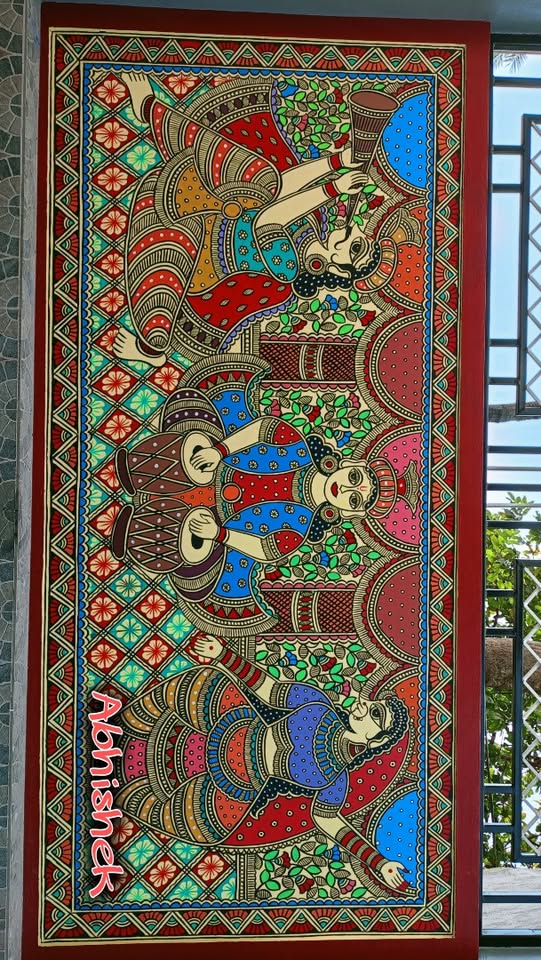
Festive drummers panel painted across a home wall
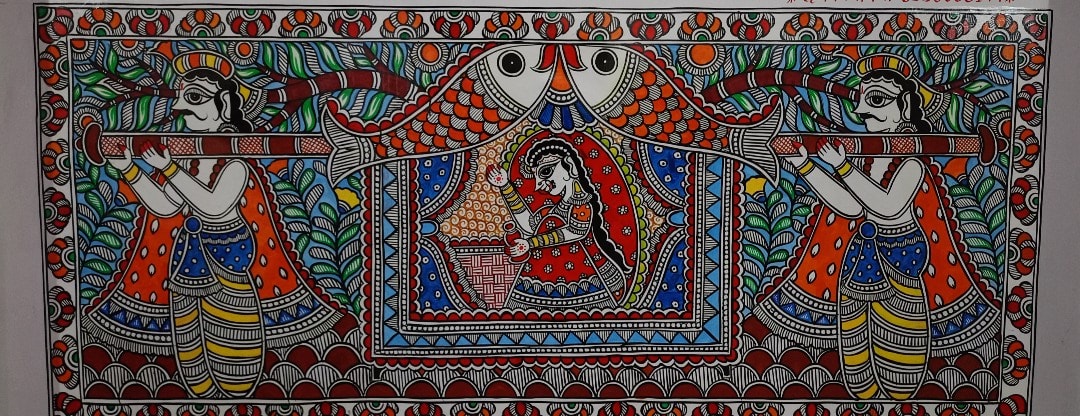
Wall Art
Doli bearers carry the bride beneath a twin-fish canopy
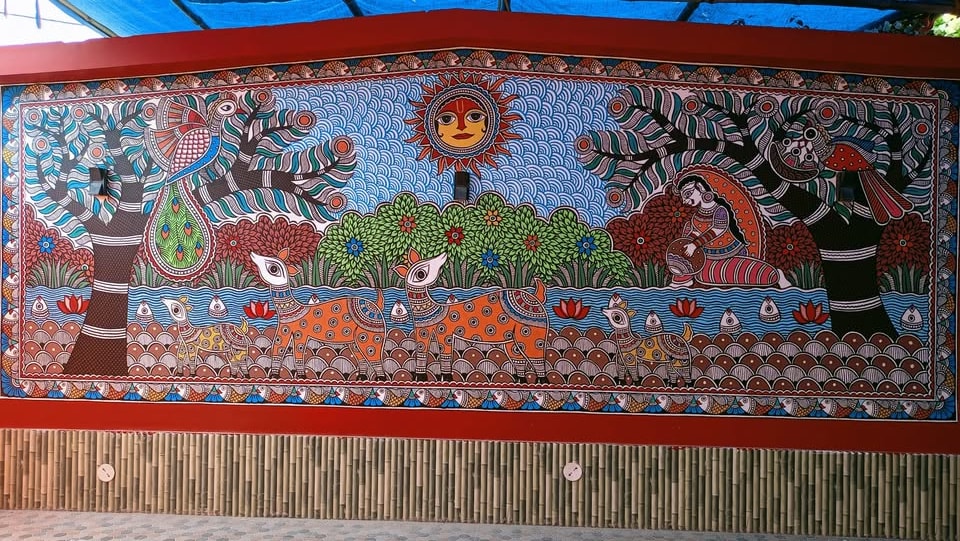
Exterior Mural
Grand Mithila mural — deer, trees of life and the sun across a full outdoor wall
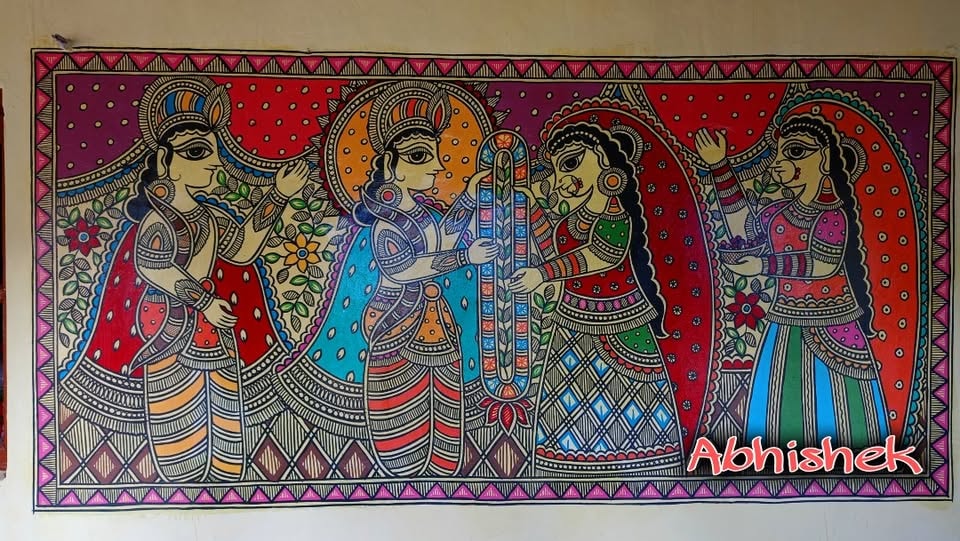
Wall Mural
Jaimala — the wedding garland ceremony with attendants
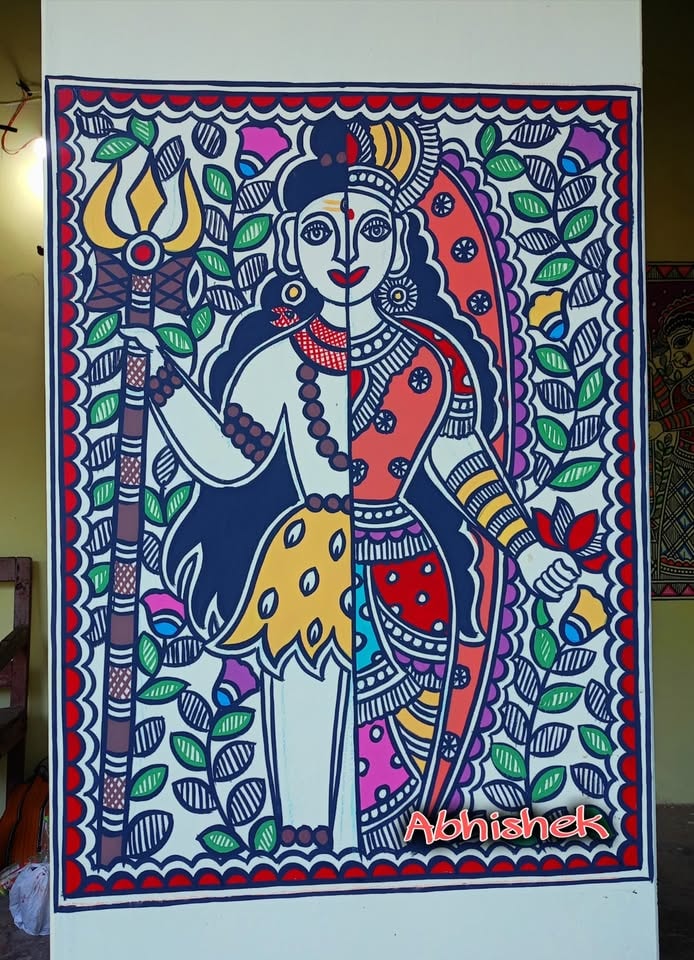
Wall Panel
Ardhanarishvara — Shiva and Parvati as one, framed in foliage
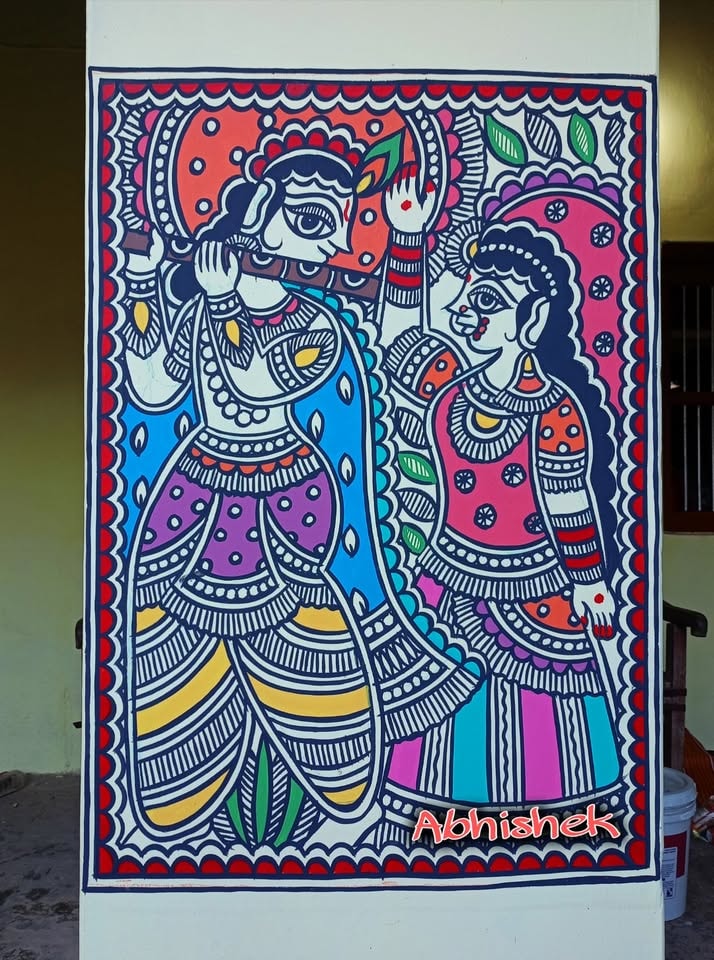
Pillar
Krishna with his flute and Radha, painted on a home pillar
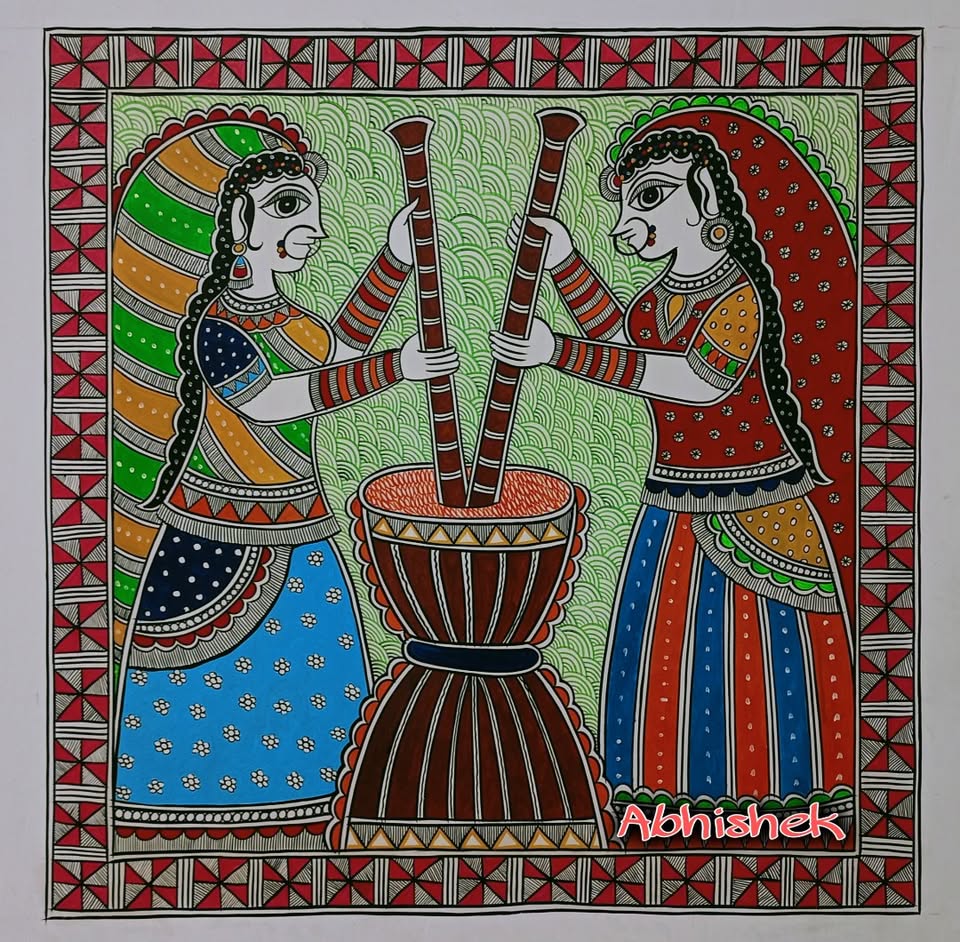
Wall Art
Two women pounding grain — everyday village life in Mithila style
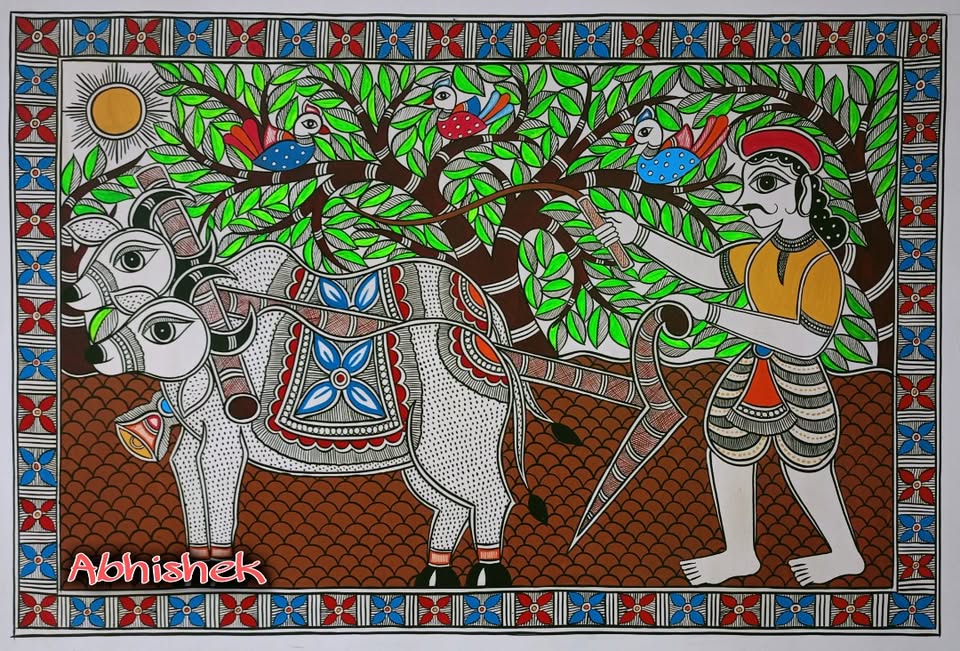
Wall Art
Farmer ploughing with his bullocks beneath a bird-filled tree
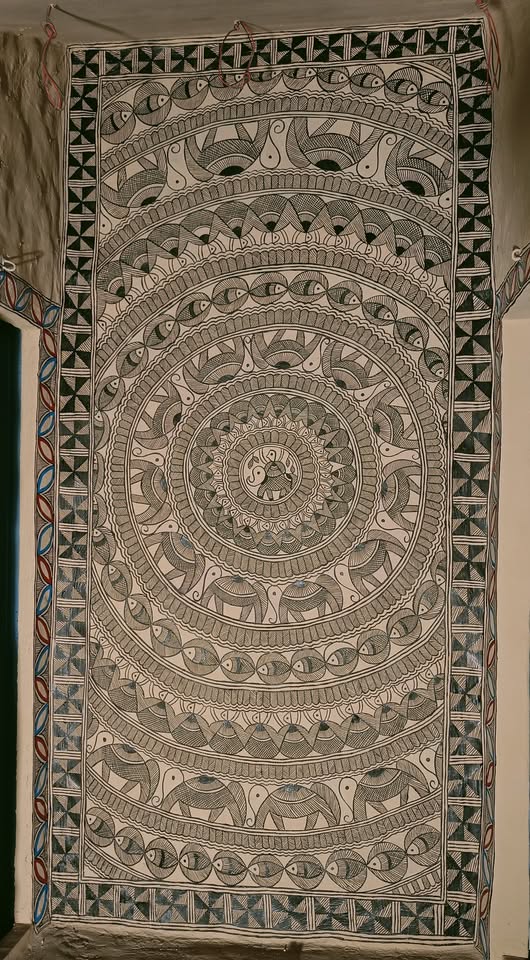
Wall Hanging
Godna-style mandala of elephants, fish and peacocks in natural monochrome
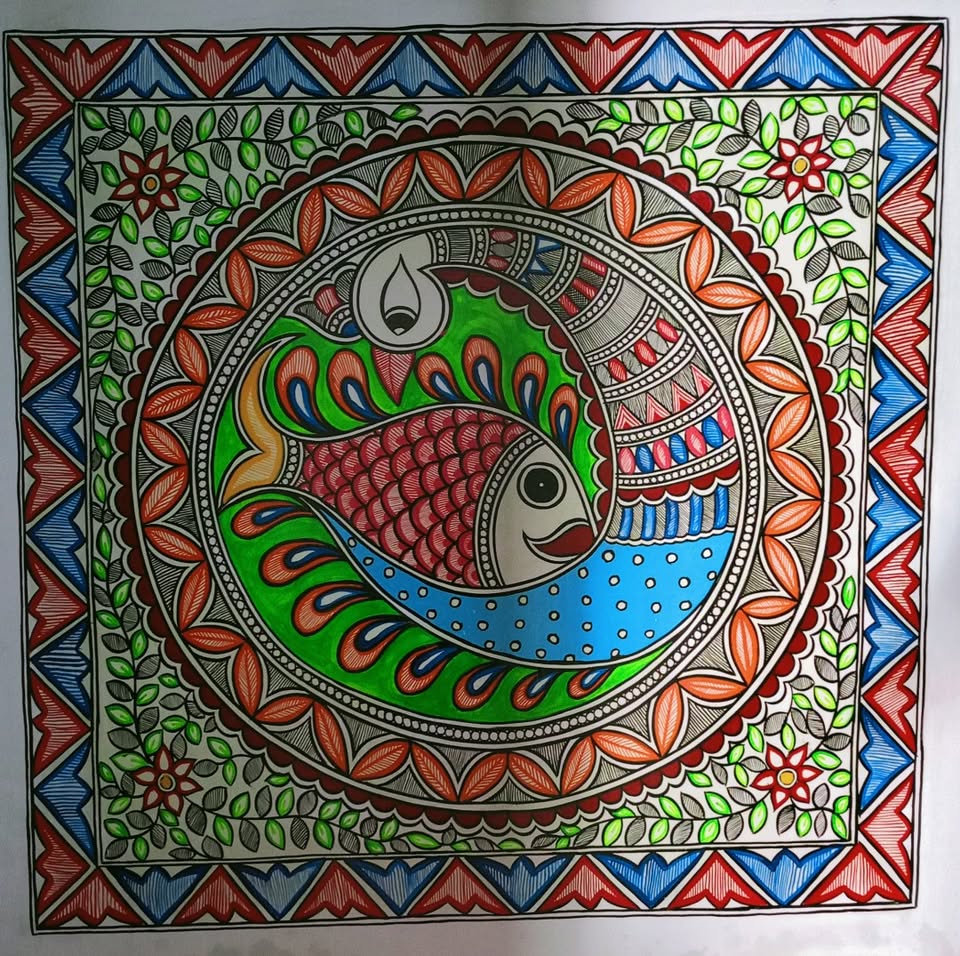
Wall Art
Twin fish mandala — a Mithila symbol of prosperity and good fortune
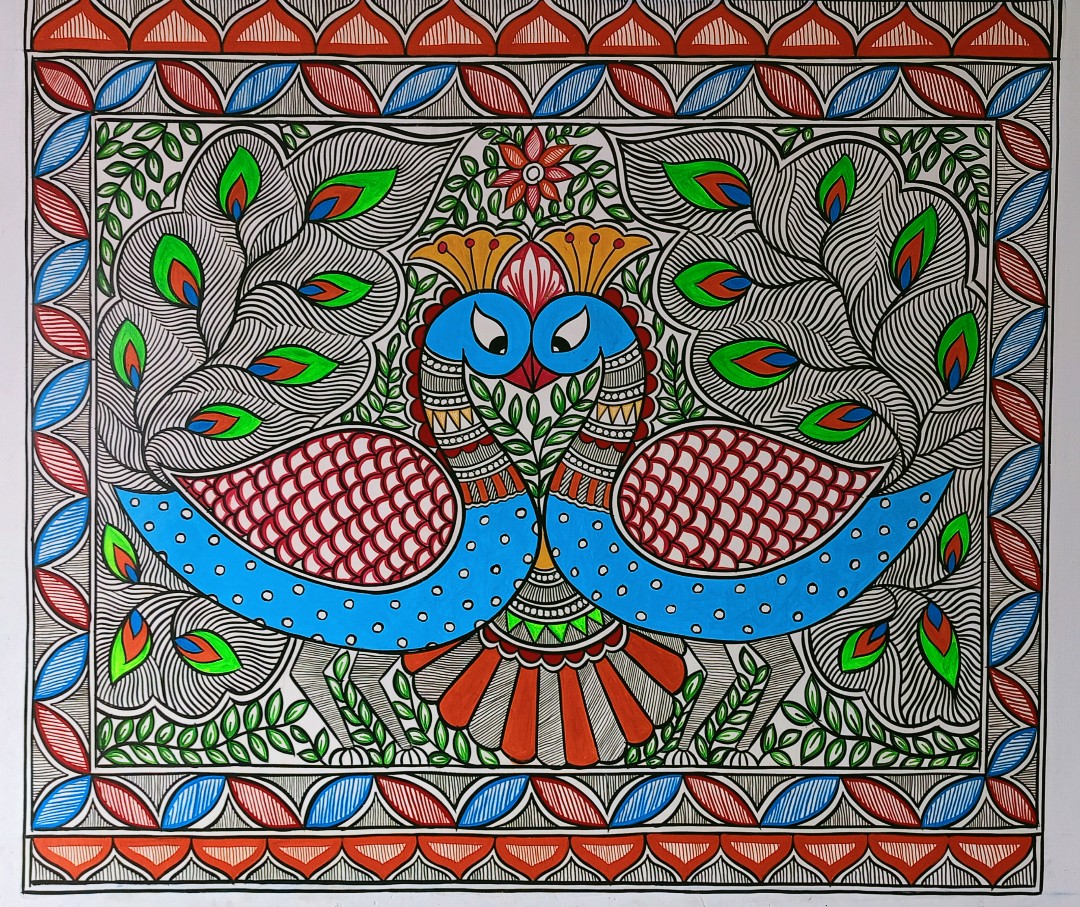
Wall Art
Twin peacocks entwined amid flowering vines
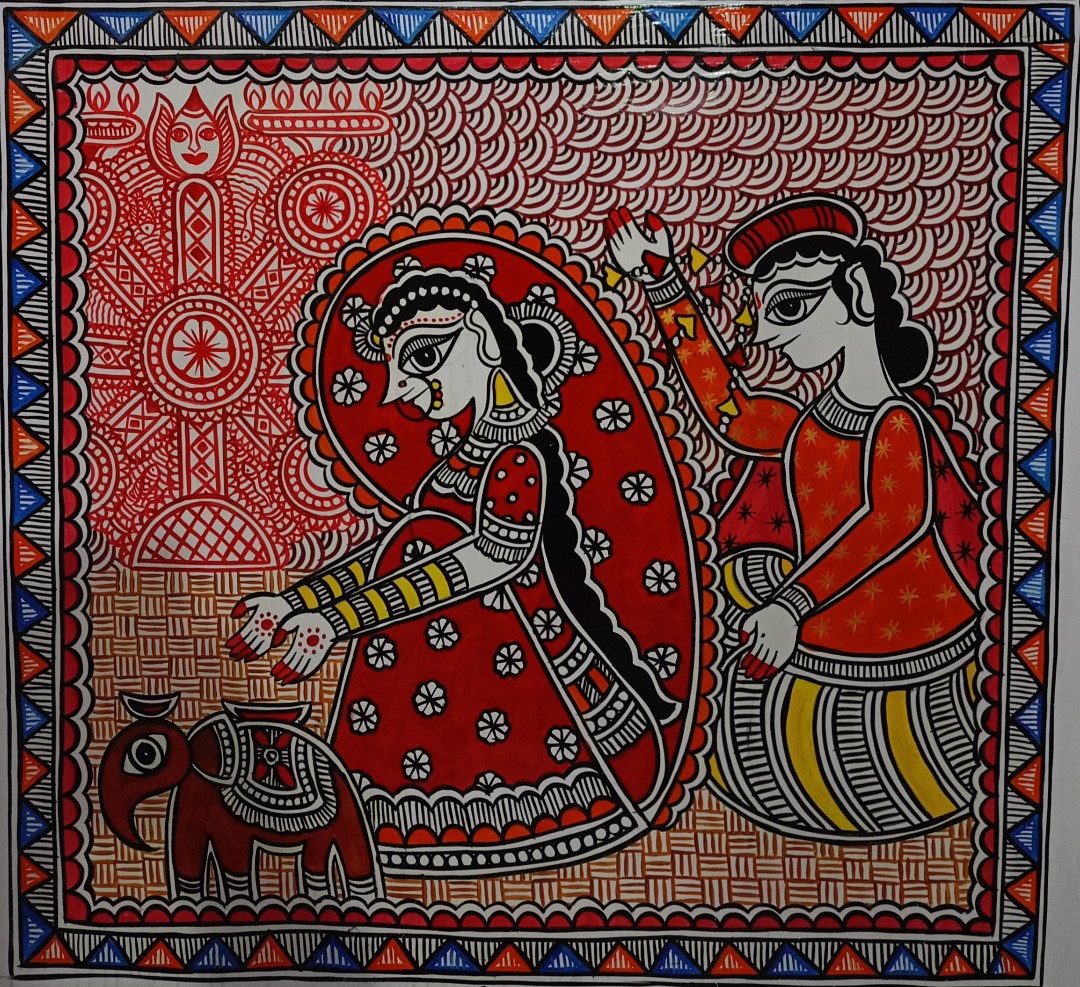
Wall Art
Bride with a ceremonial elephant in the traditional red-and-black palette
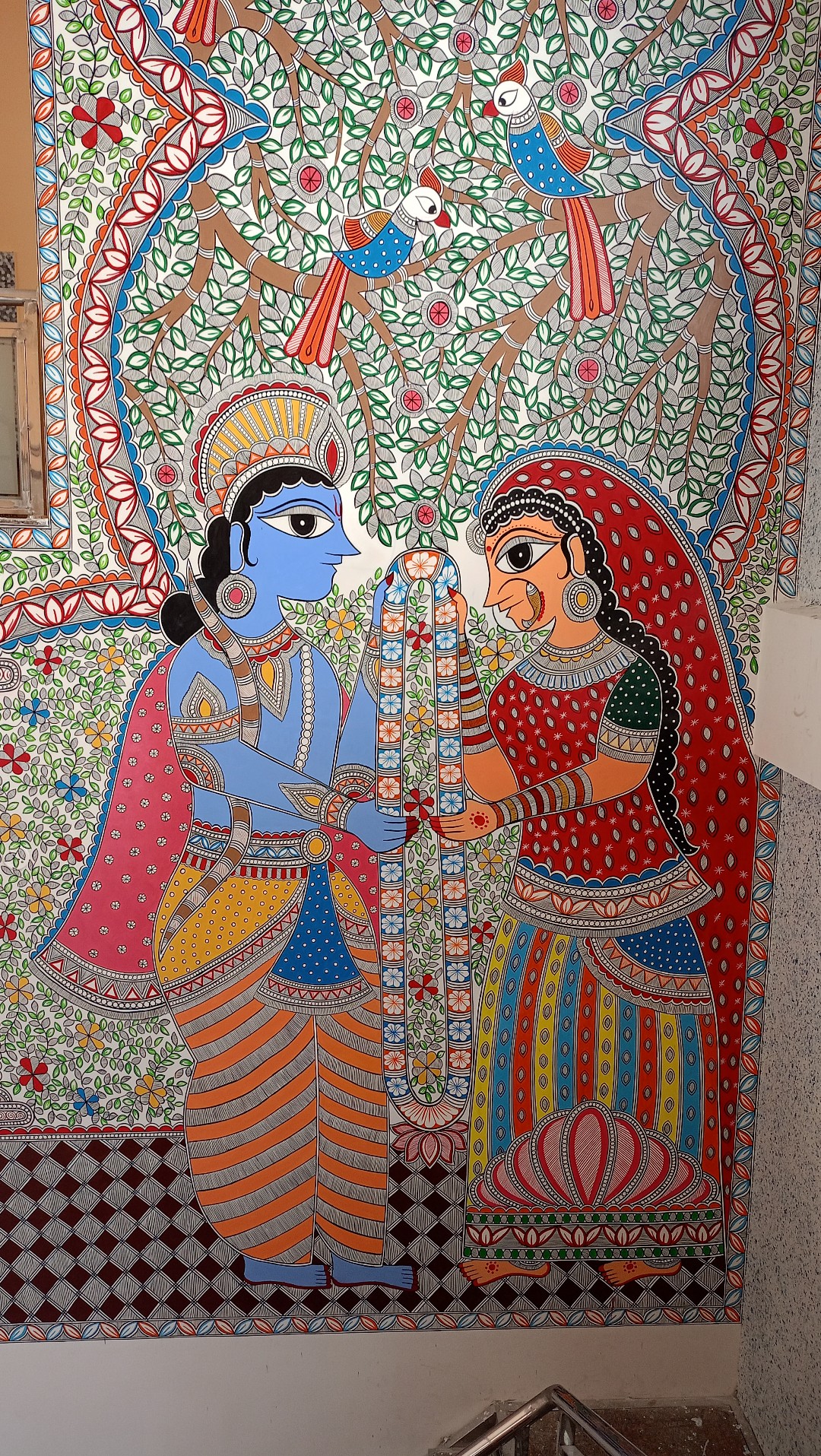
Staircase Wall
Ram and Sita's garland exchange, painted floor-to-ceiling on a stairway wall
Want Madhubani Mithila Paintings on your wall?
Tell us about your space — we'll match you with a verified artist.
Get a custom quote →